 maestro
mastercard
visa
maestro
mastercard
visa
Personal Data Protection in the United States and the European Union
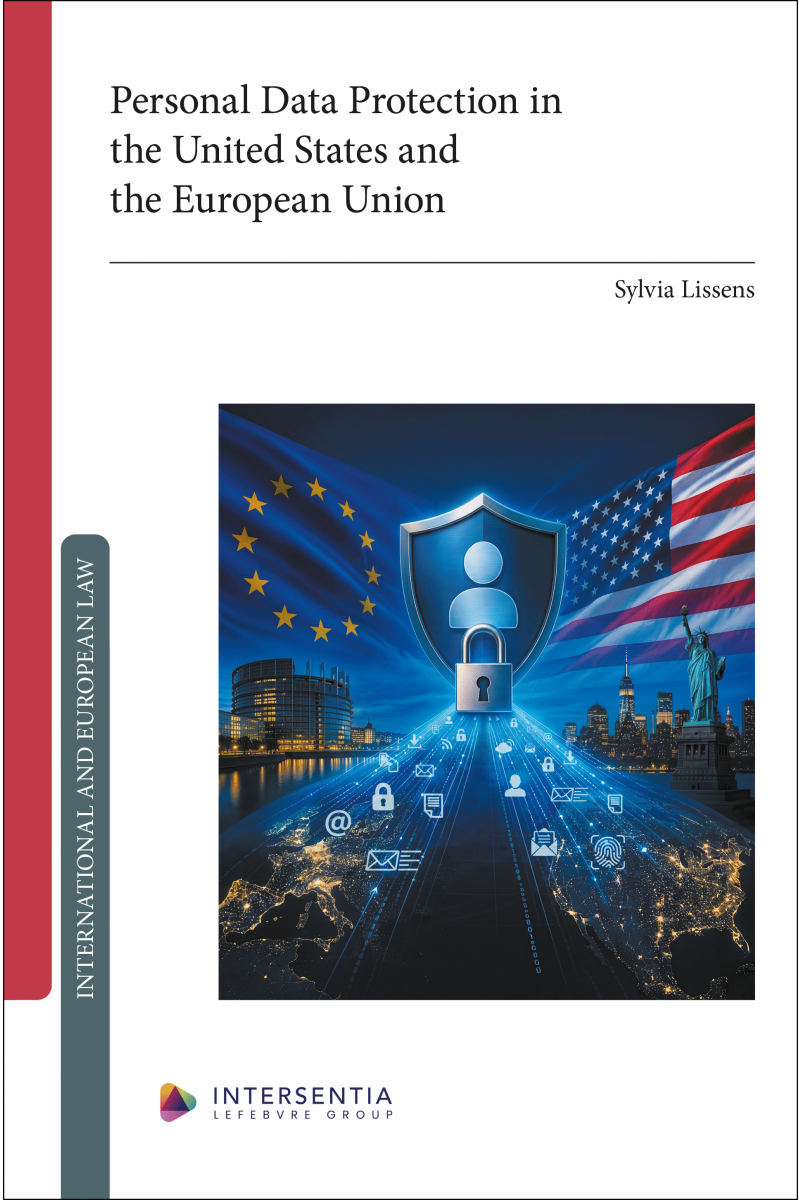
In today’s digitized world, personal data is being requested and collected everywhere. With the emergence of the internet and devices that are connected to the internet, such as smartphones, smartwatches or even smart fridges, the collection of personal data has expanded to an unprecedented scale. Personal data flows between the European Union and the United States are occurring on a daily basis, since most U.S. big tech companies sell their devices and offer their services in the EU. Successive deals were made in order to protect citizens’ personal data, but most of them did not survive scrutiny by the Court of Justice of the European Union.
Upon closer inspection, the underlying problem appears to be the different qualifications and frameworks used for personal data (protection) in the EU and the U.S., defining it respectively as a fundamental (human) right and a trade asset. This book addresses the question of what the core differences between the U.S. and EU legal approaches towards personal data (protection) are, where they come from, and whether there are signs of convergence. Functional comparative law research is conducted on three levels to reflect the perspectives of the three main stakeholders: the private sector, civil society and the public sector, focusing on intelligence and law enforcement agencies.
The U.S. and the EU seem to understand and qualify personal data differently in words and deeds, but upon closer inspection they have more in common than may seem at first sight. The findings in this book confirm that it is possible to develop a roadmap for the U.S. and EU legal approaches towards data privacy to coexist, and that convergences can be found at the level of the private sector, civil society, and the public sector intelligence and law enforcement agencies. Data privacy principles developed in different parts of the world and by several organizations share many elements in common. It is time for actors and regions to decide to cooperate and engage in mutual understanding, as the internet does not know any borders in a globalized world.
Dr. Sylvia Lissens is a legal scholar specializing in data protection, international data exchange, and the intersection of technology, security and fundamental rights. Holding master’s degrees in Law and Criminological Sciences, she conducted doctoral research on EU–U.S. data protection and international cooperation at KU Leuven. Through collaborations with the University of Helsinki, Venice International University, Duke University, and the Jagiellonian University of Cracow, she developed expertise in cybersecurity, policing, counterterrorism, and the legal implications of emerging technologies.
Digital version available on :
- Strada lex Belgium
- Strada lex Europa
You have a subscription? Activate the digital version for free with the code in the book.
| Type of product | Book |
|---|---|
| Format | Hardback |
| EAN / ISSN | 9781839706561 |
| Series name | International and European law |
| Status | Forthcoming |
| Access to exercice | No |
| Publisher | Larcier |
| Language | English |
| Publication Date | Aug 3, 2026 |
| Available on Strada Belgique | Yes |
| Available on Strada Europe | Yes |
| Available on Strada Luxembourg | No |