Book | 1st edition 2021 | Belgium | Hervé Jacquemin
L’ouvrage analyse les enjeux posés par le numérique en droit et dans d’autres disciplines des sciences humaines. Les contributions ont trait aux questions importantes du moment, tels que l’IA, le big data, la confiance, l’eJustice, etc.
Book | 1st edition 2021 | Europe | Eric Canal Forgues Alter, Maïa-Oumeïma Hamrouni
Tout en permettant d’initier le lecteur à des domaines d’application variés et novateurs, cet ouvrage apporte des réflexions prospectives sur les évolutions attendues ou souhaitées.
The Impact of e-Health on Informed Consent, anonymisation and purpose limitation
Book | 1st edition 2021 | Europe | Griet Verhenneman
Healthcare is changing. This volume explores patient autonomy and data protection laws in light of developments in modern healthcare systems, particularly ICT in healthcare and personalised medicine. A must-read for every professional active in the field of data protection law, health law, policy development or IT-driven innovation.
Book | 1st edition 2020 | United Kingdom | Georgios Terzis, Dariusz Kloza, Elzbieta Kuzelewska, Daniel Trottier
Through a collection of expert analyses, this book aims to deepen our understanding of the dangers of fake news and disinformation, while also charting well-informed and realistic ways ahead.
Legal and Ethical Aspects of Public Security, Cyber Security and Critical Infrastructure Security
Book | 1st edition 2019 | World | Anton Vedder, Jessica Schroers, Charlotte Ducuing, Peggy Valcke
This book combines theoretical discussions of the concepts at stake and case studies following the relevant developments of ICT and data-driven technologies. Part I sets the scene by considering definitions of security. Part II questions whether and, if so, to what extent the law has been able to regulate the use of ICT and datadriven technologies as a means to maintain, protect or raise security, in search of a balance between security and other public values, such as privacy and equality. Part III investigates the regulatory means that can be leveraged by the law-maker in attempts to secure products, organizations or entities in a technological and multiactor environment. Lastly, Part IV, discusses typical international and national aspects of ICT, security and the law.
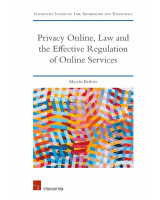
Book | 1st edition 2019 | United Kingdom | Marcin Betkier
The book draws a novel approach to data privacy (or data protection) regulations by presenting a solution to the problem of lack of individual control over personal data. It combines economic, technical, and legal perspectives to show how to reinforce individual autonomy and, at the same time, to increase the competitiveness of data economy.
Book | 2nd edition 2019 | Luxembourg | Thierry Bovier, Bernard David, Pierre Kihn, Olivier Laidebeur
This book analyzes the extent of intellectual property in Luxembourg, provides the best practices to be put in place by companies or government services and discusses important accounting issues.
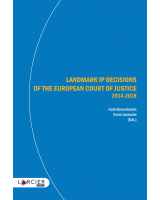
Book | 2nd edition 2019 | Belgium | Huib Berendschot, Karel Janssens
This book contains a summary and analysis of over 40 landmark decisions with respect to copyright, trade marks, databases and design rights, as ruled upon by the European Court of Justice in recent years, which has resolved many essential issues in IP law
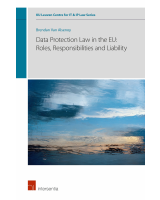
Book | 1st edition 2019 | United Kingdom | Brendan Van Alsenoy
Practically every organisation in the world processes personal data. European data protection law imposes a series of requirements designed to protect individuals against the risks that result from the processing of their data. It also distinguishes among different types of actors involved in the processing and sets out different obligations for each type of actor. The most important distinction in this regard is the distinction between 'controllers' and 'processors'. This book seeks to determine whether EU data protection law should continue to maintain its current distinction.
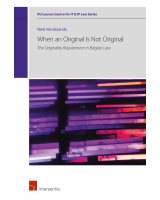
Book | 1st edition 2019 | Belgium | Niels Vandezande
This book analyses a select number of incarnations of the originality requirement in different branches of Belgian law in order to establish whether common elements or a common root can be found. These findings will subsequently be applied to the practice of digitalization in law in order to gain a better understanding of how the concept of originality should be interpreted in this matter.
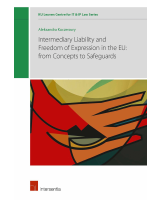
Book | 1st edition 2018 | Europe | Aleksandra Kuczerawy
States increasingly delegate regulatory and police functions to internet intermediaries. This may lead to interference with the right to freedom of expression. In a time when these issues are of particular relevance, Intermediary liability and freedom of expression in the EU provides the reader with a framework to protect the freedom of expression in an online world.
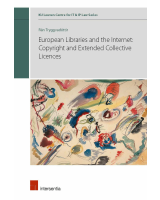
Book | 1st edition 2018 | Europe, United Kingdom | Ran Tryggvadottir
European Libraries and the Internet: Copyright and Extended Collective Licences examines libraries' online use of in-copyright works from their collections and how such use is affected by copyright. In particular, the book examines whether the system of extended collective licences could facilitate online access without territorial limitations to in-copyright works in libraries, within Europe or more specifically within the European Economic Area (EEA).
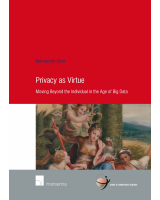
Moving Beyond the Individual in the Age of Big Data
Book | 1st edition 2017 | United Kingdom | Bart van der Sloot
Privacy as Virtue discusses whether a rights-based approach to privacy regulation still suffices to address the challenges triggered by new data processing techniques such as Big Data and mass surveillance.
Book | 1st edition 2017 | World | Dan Svantesson, Dariusz Kloza
'I think you are misunderstanding the perceived problem here, Mr President. No one is saying that you broke any laws. We are just saying it is a little bit weird that you did not have to.’ - John Oliver
This book focuses on different topics such as competence of the courts, seizure, evidence, customs regulation and damages, through the case law of different national European jurisdictions and the European Court of Justice.
This rise of a particular kind of European Union legislation known as the ‘optional instrument’ is a novel trend in the context of EU law, and one that until now has not been comprehensively mapped or explored. This study examines and discusses existing and proposed EU Optional Instruments (OIs) in different fields of European law, including company law, intellectual property law and procedural law (such as the European Company, the Community Trade Mark and the European Small Claims Procedure, respectively), as well as contract law.
Contributions in honour of Peter Hustinx, European Data Protection Supervisor (2004-2014)
Book | 1st edition 2014 | United Kingdom | Hielke Hijmans, Herke Kranenborg
Privacy and data protection are taken seriously in wide circles of our society. Usually It is the scandals that make the news, the latest example being the NSA affair. These news stories create a feeling of discomfort and lead to diminishing trust of citizens in companies they deal with, in their governments, in supranational entities such as the European Union, in the law, and diminishing trust between countries. This book defines the restoration of this trust in relation to privacy and data protection as the most pressing challenge. It reflects on the state of play in the area of privacy and personal data protection in Europe and the United States at the start of 2014.
Cet ouvrage offre un tour d'horizon des questions relatives à la neutralité et à l'ouverture d'internet : liberté d'information, non-discrimination dans l'accès à Internet, problèmes de concurrence et de régulation dans une perspective comparative.